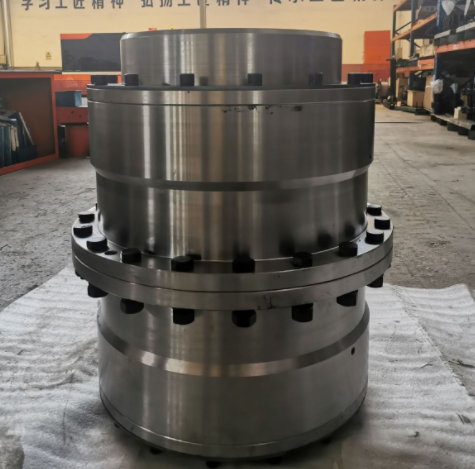
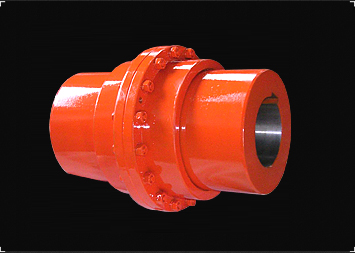
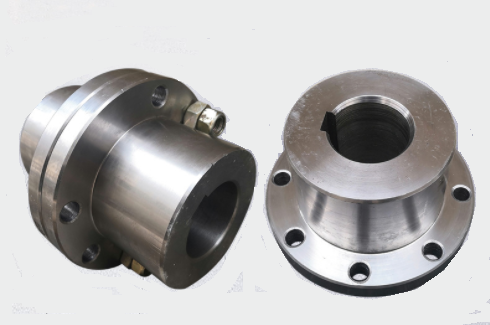
Showing posts with label shaft coupling. Show all posts

Wednesday, February 4, 2026

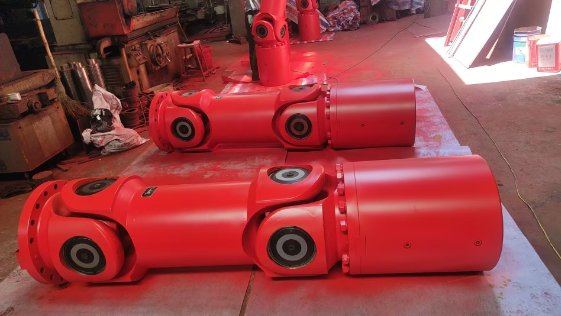
Heavy-duty Vehicle Drive Shaft


Heavy-duty Vehicle Drive Shaft


Introduction


A drive shaft consists of a shaft tube, a telescopic sleeve, and a universal joint.

The Drive Shaft is a circular component that connects or assembles various parts, while being capable of moving or rotating. It is generally made of lightweight alloy steel tubes with excellent torsional resistance. For front-engine, rear-wheel-drive vehicles, it is the shaft that transmits the rotation of the transmission to the final drive. It can consist of multiple sections connected by universal joints. As a high-speed rotating body with minimal support, its dynamic balance is crucial. Typically, drive shafts undergo dynamic balance testing before leaving the factory and are adjusted on a balancing machine.


Function

The drive shaft is a key component for transmitting power in a vehicle's drive train. Its function, together with the gearbox and drive axle, is to transfer power from the engine to the wheels, enabling the vehicle to generate driving force.


Applications

Special vehicle drive shafts are mainly used in models such as oil tankers, refueling trucks, sprinkler trucks, sewage suction trucks, fecal suction trucks, fire trucks, high-pressure cleaning trucks, road wreckers, aerial work platforms, and garbage trucks.


Structure


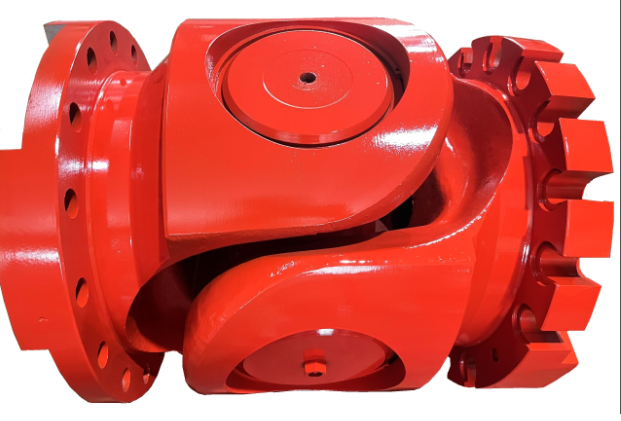
Universal Joint


The universal joint is a critical component of a vehicle's drive shaft. A vehicle is a moving object. In rear-wheel-drive vehicles, the engine, clutch, and transmission are mounted as a single unit on the frame, while the drive axle is connected to the frame via elastic suspension. There is a distance between these two assemblies, which requires a connection. During vehicle operation, uneven road surfaces cause jolting.

Heavy-duty Vehicle Drive Shaft,www.timothyholding.com


1. Function:

A typical universal joint is composed of a cross shaft, cross bearings, and a flange yoke. It is a key component of the vehicle's drive shaft. In front-engine, rear-wheel-drive vehicles, the universal joint drive shaft is installed between the transmission output shaft and the drive axle final drive input shaft. In front-engine, front-wheel-drive vehicles, the drive shaft is omitted, and universal joints are installed between the front axle half-shafts (which are responsible for both driving and steering) and the wheels. During vehicle operation, uneven road surfaces cause jolting, load changes, or differences in the installation positions of the two assemblies—all of which can alter the angle and distance between the transmission output shaft and the drive axle final drive input shaft. Therefore, a device that "adapts to changes" is needed to solve this problem, leading to the development of the universal joint.


2. Transmission Characteristics:

In front-engine, rear-wheel-drive (or all-wheel-drive) vehicles, suspension deformation during movement causes frequent relative motion between the drive axle final drive input shaft and the transmission (or transfer case) output shaft. Additionally, to avoid certain mechanisms or devices (making linear power transmission impossible), a device is necessary to ensure normal power transmission—hence the emergence of universal joint transmission. Universal joint transmission must meet the following characteristics:

  • a. Reliably transmit power when the relative position of the two connected shafts changes within the expected range;

  • b. Ensure uniform operation of the two connected shafts. The additional load, vibration, and noise caused by the universal joint angle must be within allowable limits;

  • c. High transmission efficiency, long service life, simple structure, easy manufacturing, and convenient maintenance. For vehicles, since the output shaft of a single cross-shaft universal joint rotates at a non-uniform speed relative to the input shaft (when there is a certain angle), a double universal joint (or multi-universal joint) transmission must be used. The two universal joint yokes connected to the same drive shaft should be arranged in the same plane, and the angles of the two universal joints should be equal. This is extremely important. During design, the angle of the universal joint should be minimized as much as possible.

  • Telescopic Sleeve

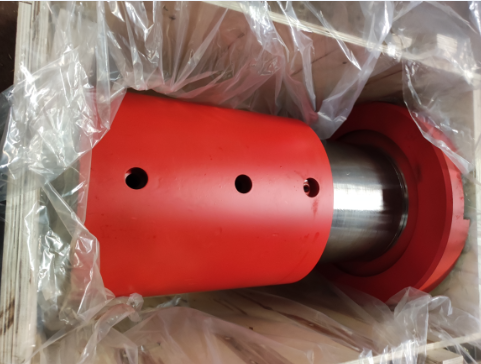
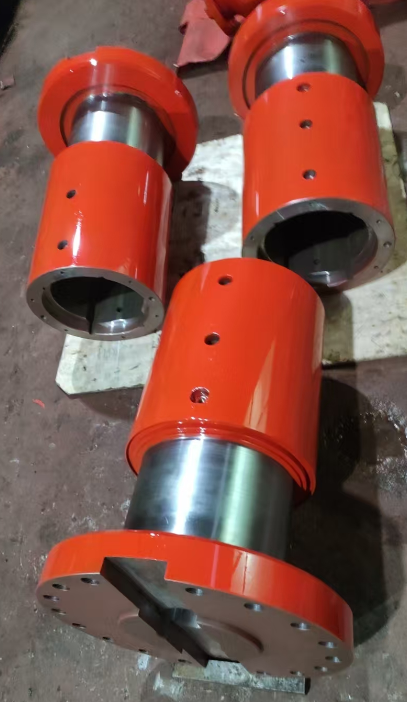
In the traditional drive shaft structure, the spline sleeve is welded to the flange yoke, and the spline shaft is welded to the drive shaft tube. The new-type drive shaft abandons this traditional structure: instead, the spline sleeve is welded integrally with the drive shaft tube, and the spline shaft is made integrally with the flange yoke. Furthermore, the rectangular-tooth spline is replaced with a large-pressure-angle involute short-tooth spline, which not only enhances strength but also facilitates extrusion forming, meeting the requirements of high-torque working conditions. The tooth surfaces of the telescopic sleeve and spline shaft are fully coated with a layer of nylon material, which not only improves wear resistance and self-lubrication but also reduces damage to the drive shaft caused by impact loads and enhances buffering capacity.

This type of drive shaft adds a tubular sealing protective sleeve outside the flange spline shaft. Two polyurethane rubber oil seals are installed at the end of this protective sleeve, creating a fully sealed space inside the telescopic sleeve. This prevents the telescopic spline shaft from being eroded by external sand and dust, providing both dustproof and rustproof protection. Therefore, during assembly, applying lubricating grease once between the spline shaft and the sleeve fully meets the service requirements. There is no need to install an oil nipple for lubrication, reducing maintenance tasks.


Shaft Bushing

Shaft bushings are designed to reduce friction and wear when the shaft moves. Their basic purpose is similar to that of bearings, and they are relatively cheaper. However, they have higher frictional resistance, so they are only used in some components. Most shaft bushings are made of copper, but plastic ones are also available. Shaft bushings are mostly placed between the shaft and the supporting structure, fitting tightly to the supporting structure—only the shaft can rotate on the bushing. When assembling the shaft and shaft bushing, lubricant is added between them to reduce friction during rotation.

Heavy-duty Vehicle Drive Shaft,www.timothyholding.com


Contact Name:August

Mobile Phone:+86-13758897904

E :august@timothyholding.com

Web:www.timothyholding.com

Address:55# Jinshi Road ,Lecheng Industrial Park,Yueqing City,Zhejiang provice,China

Sunday, November 16, 2025

Cardan Shaft Coupling Universl Joint for Rolling Mill


文章附图

Cardan Shaft Coupling Universl Joint for Rolling Mill


Suitability of Cardan Couplings for High-Speed and Heavy-Duty Applications

Cardan couplings are well-suited for a wide range of applications, including high-speed and heavy-duty ones. Here’s why:

  • High Torque Capacity: Cardan couplings can handle substantial torque loads, making them suitable for heavy-duty machinery and equipment.

  • Angular Misalignment: They can accommodate significant angular misalignment, which is common in applications with varying shaft angles.

  • Smooth Transmission: Cardan couplings provide smooth and continuous power transmission, essential for precision and stability in high-speed applications.

  • Robust Construction: They are often built with durable materials and designed to withstand the stresses of heavy loads and high speeds.

  • Shock Absorption: The flexibility of cardan couplings allows them to absorb shocks and vibrations, minimizing the impact on machinery components.

  • Versatility: Cardan couplings can connect shafts of different sizes and types, allowing for versatility in various applications.

  • Reliable Performance: When properly maintained and installed, cardan couplings offer reliable and consistent performance even in demanding conditions.

Contact Name:August

Mobile Phone:+86-13758897904

E :august@timothyholding.com

Web:www.timothyholding.com

Address:55# Jinshi Road ,Lecheng Industrial Park,Yueqing City,Zhejiang provice,China
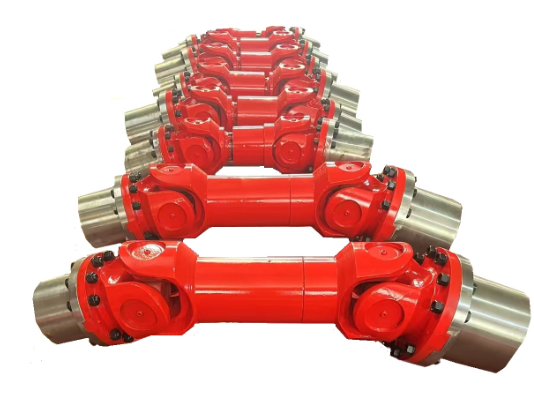

SWC315 cardan shafts with couplings.png

Sunday, August 31, 2025

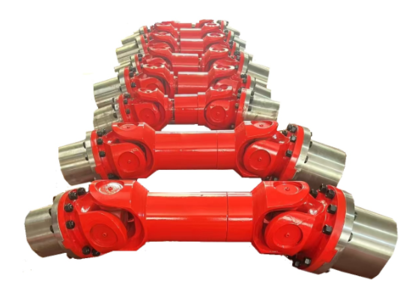
SWC315 cardan shafts with couplings


SWC315 cardan shafts with couplings

SWC315 cardan shafts with couplings,www.timothyholding.com

Product Details

SWC315 cardan shafts with couplings


Material:35CrMo and 20CrMnTi


Largely used in rolling mills,Pipe straighteners,Steel mill,tube mill,Continuous casting machinery,Paper machines ,Piercing mills,Bridge cranes,Steckel mill,Punchers,Roller conveyor, Rotating furnace,Mining machinery and other heavy duty machinery .


SWC315 cardan shafts with couplings.png

SWC315 cardan shafts with couplings,www.timothyholding.com

cardan shafts with couplings.png

SWC315 cardan shafts with couplings,www.timothyholding.com


Contact Name:August

Mobile Phone:+86-13758897904

E :august@timothyholding.com

Web:www.timothyholding.com

Address:55# Jinshi Road ,Lecheng Industrial Park,Yueqing City,Zhejiang provice,China
Wednesday, August 6, 2025

Material Requirements and Specifications for Gear Couplings


Material Requirements and Specifications for Gear Couplings

文章附图

Material Requirements and Specifications for Gear Couplings

The internal structure of gear couplings is complex, requiring specific materials to meet the torque and rotational speed demands. Commonly used materials include 42CrMo and Grade 45 forged steel. These materials are selected for their wear resistance: higher material hardness improves wear resistance, enhances torque capacity, and extends the service life of the coupling.

swc 780 cardan joint.png

42CrMo Steel used in gear couplings is an ultra-high-strength steel characterized by:

· High strength and toughness,

· Good harden-ability with minimal deformation during quenching,

· Absence of noticeable temper brittleness,

· High fatigue resistance and multi-impact resistance after quenching and tempering treatment,

· Excellent low-temperature impact toughness,

· Superior creep strength and enduring high-temperature performance.

For heat treatment, surface hardening after quenching and tempering is typically applied to optimize its mechanical properties.


https://www.timothyholding.com/Material-and-Specifications-for-Gear-Couplings.html


Monday, July 14, 2025

Causes of Drum Gear Coupling Failures


Causes of Drum Gear Coupling Failures

web:https://www.timothyholding.com作者:Timothy Couplings
文章附图

Drum Gear Coupling , www.timothyholding.com

Causes of Drum Gear Coupling Failures

1. System Design & Integration Issues

· Unbalanced Shaft System Compatibility:
Components in the drive train (e.g., diesel engines, gearboxes, shafts, and highly elastic couplings) must be mutually complementary in design and application. Sub-optimal integration or low manufacturing precision in any component may compromise the entire system.

Example: In marine applications, improper alignment between the main engine and propulsion system accelerates coupling wear.

2. Mechanical Overload & Misalignment

· Damper Subsidence in Prime Movers:
Subsidence of the main engine's vibration damper induces shaft misalignment, generating additional torsional loads.

Consequence: Excessive heat buildup in highly elastic couplings leads to thermal stress fractures.

· Insufficient Compensation Capacity:
Despite their angular displacement tolerance, drum gear couplings may fail under unanticipated combined loads (e.g., simultaneous axial, radial, and angular stresses)sleeve.pngsleeves.png.

3. Operational & Maintenance Factors

· Improper Usage:

Overloading beyond rated torque.

Frequent starts/stops or reverse operations in non-design conditions.

· Environmental Neglect:

Contamination (dust, moisture) entering unsealed lubrication cavities.

Failure to replace degraded lubricant, accelerating tooth surface wear.

4. Industry-Specific Challenges

· Broad Application Scope:
Widely used in heavy industries (metallurgy, mining, etc.), couplings face diverse operational stresses.

Risk: Misapplication in high-speed or ultra-precision scenarios beyond their design limits.

Key Takeaway:
Drum gear coupling failures often stem from systematic design flawsmechanical over-stress, or operational oversights. Regular alignment checks, load monitoring, and adherence to lubrication protocols are critical for longevity.


https://www.timothyholding.com/Causes-of-Drum-Gear-Coupling-Failures.html


Friday, June 13, 2025

The processing steps for drum gear couplings


The processing steps for drum gear couplings

文章附图

 drum gear couplings,www.timothyholding.com


What are the processing steps for drum gear couplings ?
Drum gear couplings are generally processed through turning and milling operations (CNC milling ensures higher precision). Keyways can be machined via wire cutting or broaching.

Processing Methods:
Typical manufacturing steps include turning, milling, gear hobbing, and gear shaping. The tooth surfaces undergo high-frequency quenching. For higher performance requirements, die forging is used to shape the coupling before machining. Some couplings are formed using cast steel or cast iron, followed by machining.

drum gear coupling for crane.png

drum gear couplings,www.timothyholding.com

Technical Overview:
Drum gear couplings fall under the category of flexible-rigid couplings. They consist of internal gear rings and flanged half-couplings with external teeth. The external teeth are either straight or drum-shaped. Compared to straight-tooth couplings, drum-shaped teeth allow for greater angular displacement, improve tooth contact conditions, enhance torque transmission capacity, and extend service life.

Key Advantages:

1. High Load Capacity: The carburizing and quenching treatment of the drum-shaped tooth surfaces significantly increases load-bearing capacity.

2. Reduced Wear: When forced oil lubrication is applied, tooth surface wear decreases dramatically (to approximately 10% of that with grease lubrication). Circulating oil also dissipates heat generated by rolling mills and gear friction, preventing degradation of the material’s allowable contact stress.

3. Durability: Under normal conditions, tooth breakage is avoided, meeting the demands of continuous rolling mill operations.

4. Axial Flexibility: The design accommodates axial displacement during rolling mill operation, enabling easy expansion and contraction.

5. Operational Benefits: Safe, clean, and efficient performance.


https://www.timothyholding.com/The-processing-steps-for-drum-gear-couplings.html


Wednesday, June 11, 2025

Coupling Functions in Transmission Systems

 Coupling Functions in Transmission Systems

  1. Shaft Connection &     Torque Transmission

    • Flexible couplings with elastic elements compensate for axial,      radial, and angular misalignment.

  2. Overload Protection

    • Types: Pin-type, friction, magnetic particle, centrifugal,      hydraulic.

  3. Vibration Damping

    • Compensates for misalignment caused by machining errors,      load-induced deformation, and thermal effects.

High-Speed Grinding Applications 

  • Stiffness and power in     grinding systems are critical for high-speed operations.

  • High-speed spindle units are     key components in grinding machines.

  • Grinding     wheels require high strength and optimal abrasive performance.

  • Cooling systems are     essential for high-speed grinding efficiency.

    GⅠCL coupling.jpg
    drum gear coupling ,https://www.timothyholding.com

Key Takeaways

  • Couplings     are vital for misalignment compensation and vibration     reduction.

  • Material     selection, forging precision, and heat treatment directly impact     performance.

  • Sealing     technology ensures longevity in harsh environments.

  • High-speed     applications demand rigid yet flexible coupling solutions.

Wednesday, June 4, 2025

Drum Gear Coupling Models, Standards, and Performance Overview


Drum Gear Coupling Models, Standards, and Performance Overview

Timothy Coupling
文章附图

Drum Gear Coupling Models, Standards, and Performance Overview

1. GICL Series (JB/T8854.3-2001)

· Model: GICL

Application: Connects two horizontally aligned shafts with angular misalignment compensation.

Rated Torque: 0.8–3,200 kN·m

Operating Temp.: -20°C to +80°C

· Model: GICLZ (Extended Shaft Version)

Application: Same as GICL but for longer shaft distances.

Rated Torque: 0.8–3,200 kN·m

Operating Temp.: -20°C to +80°C

2. GIICL Series (JB/T8854.2-2001)

· Model: GIICL

Application: Horizontal shaft connection with angular and radial displacement compensation.

Rated Torque: 0.4–4,500 kN·m

Operating Temp.: -20°C to +80°C

· Model: GIICLZ (Extended Shaft Version)

Application: Long-distance shaft connections with misalignment tolerance.

Rated Torque: 0.4–4,500 kN·m

Operating Temp.: -20°C to +80°C

3. GCLD Series (JB/T8854.1-2001)

· Model: GCLD

Application: Connects motors to machinery with angular misalignment compensation.

Rated Torque: 1.12–50 kN·m

Operating Temp.: -20°C to +80°C

4. NGCL Series (JB/ZQ4644-97)

· Model: NGCL (Brake Wheel Type)

Application: Horizontal shaft connection with integrated braking system.

Rated Torque: 355–100,000 N·m

5. TGL Series (JB/T5514-91)

· Model: TGL

Application: General-purpose shaft connection with elastic displacement compensation.

Rated Torque: 10–2,500 N·m

Operating Temp.: -20°C to +80°C

6. WG Series (JB/ZQ4186-97)

· Model: WG

Application: Heavy-duty horizontal shaft connections with angular misalignment compensation.

Rated Torque: 710–1,250,000 N·m

Operating Temp.: -20°C to +80°C

7. WGC Series (JB/T7002-93)

· Model: WGC

Application: Vertical shaft connections.

Rated Torque: 0.71–160 kN·m

8. WGT Series (JB/T7004-93)

· Model: WGT (With Intermediate Shaft)

Application: Long-distance horizontal shaft connections.

Rated Torque: 0.71–1,250 kN·m

9. WGP Series (JB/T7001-93)

· Model: WGP (With Brake Disc)

Application: Horizontal shaft connections with brake disc (diameter: 315–1,000 mm).

Rated Torque: 0.71–160 kN·m

shaft coupling.png

Summary Table

Model

Standard

Torque Range

Key Feature

Temp. Range

GICL

JB/T8854.3-2001

0.8–3,200 kN·m

Basic horizontal shaft coupling

-20°C to +80°C

GICLZ

JB/T8854.3-2001

0.8–3,200 kN·m

Extended shaft version

-20°C to +80°C

GIICL

JB/T8854.2-2001

0.4–4,500 kN·m

High torque, angular compensation

-20°C to +80°C

GCLD

JB/T8854.1-2001

1.12–50 kN·m

Motor-machinery connection

-20°C to +80°C

NGCL

JB/ZQ4644-97

355–100,000 N·m

Brake wheel integrated

-

WG

JB/ZQ4186-97

710–1,250,000 N·m

Heavy-duty industrial use

-20°C to +80°C

WGC

JB/T7002-93

0.71–160 kN·m

Vertical shaft connection

-

Selection Guidelines

· For high torque & heavy loads: GIICL or WG series.

· For motor connections: GCLD series.

· For braking systems: NGCL or WGP series.

· For vertical shafts: WGC series.

Proper selection based on torque, alignment, and environmental conditions ensures optimal performance and longevity. Always refer to manufacturer specifications for detailed installation and maintenance requirements.