Showing posts with label gear couling. Show all posts

Wednesday, August 6, 2025

Material Requirements and Specifications for Gear Couplings
 

Material Requirements and Specifications for Gear Couplings

文章附图

Material Requirements and Specifications for Gear Couplings

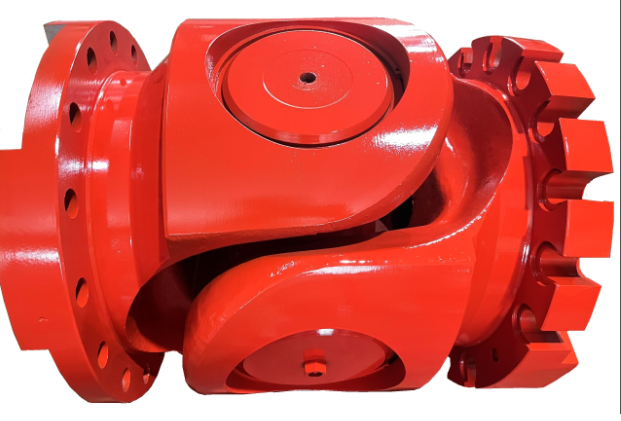
The internal structure of gear couplings is complex, requiring specific materials to meet the torque and rotational speed demands. Commonly used materials include 42CrMo and Grade 45 forged steel. These materials are selected for their wear resistance: higher material hardness improves wear resistance, enhances torque capacity, and extends the service life of the coupling.

swc 780 cardan joint.png

42CrMo Steel used in gear couplings is an ultra-high-strength steel characterized by:

· High strength and toughness,

· Good harden-ability with minimal deformation during quenching,

· Absence of noticeable temper brittleness,

· High fatigue resistance and multi-impact resistance after quenching and tempering treatment,

· Excellent low-temperature impact toughness,

· Superior creep strength and enduring high-temperature performance.

For heat treatment, surface hardening after quenching and tempering is typically applied to optimize its mechanical properties.


https://www.timothyholding.com/Material-and-Specifications-for-Gear-Couplings.html


Monday, June 9, 2025

Application and Considerations for Couplings in Rolling Mills


Application and Considerations for Couplings in Rolling Mills

文章附图

Application and Considerations for Couplings in Rolling Mills

1. Application of Couplings in Rolling Mills

Couplings are critical transmissioncomponents in rolling mills, connecting the motor, reducer, and work rolls totransmit torque and accommodate misalignment. The most commonly used typesinclude:

  • Gear Couplings: Widely     adopted due to their high torque capacity (standardized for <1000 kN·m     in China) and ability to handle slight angular/radial deviations.

  • Elastic Sleeve Pin Couplings: Used in some mills for their compact size and heavy-load     capability, suitable for low-speed, high-torque applications. However,     they are being phased out and should be avoided in new designs.

    sleeves.png

2. Key Considerations

  • Axial Load Resistance: Gear     couplings in rolling mills often endure heavy axial loads, which may shear     the sealing end cover screws, damage seals (causing oil leaks), and     accelerate gear wear. Solution: Increase screw diameter in     heavy-duty designs.

  • Precision & Balancing: For high-speed applications (e.g., roll shafts), couplings must be     dynamically balanced to minimize vibration.

  • Obsolescence Risk: Avoid     outdated designs like elastic sleeve pin couplings unless necessary for     legacy systems.

3. System Integration

Rolling mills consist of a prime mover(motor), transmission (couplings, gearboxes), and actuators (rolls). Propercoupling selection ensures efficient power transfer, reduces downtime, andextends equipment life.

Note: Regular maintenance (e.g., lubrication, sealinspection) is essential to prevent failures in harsh rolling mill conditions.


Translation Rationale:

  • Structure: Organized     into clear sections for technical readability.

  • Terminology: Uses     industry-standard terms (e.g., "dynamic balancing,"     "angular/radial deviations").

  • Conciseness: Combines     related ideas (e.g., axial load effects + solutions) for efficiency.

  • Warnings: Explicitly     flags phased-out components to align with the original text’s intent.

https://www.timothyholding.com/Application-of-Couplings-in-Rolling-Mills.html