Showing posts with label double cardan shaft. Show all posts

Monday, November 13, 2023

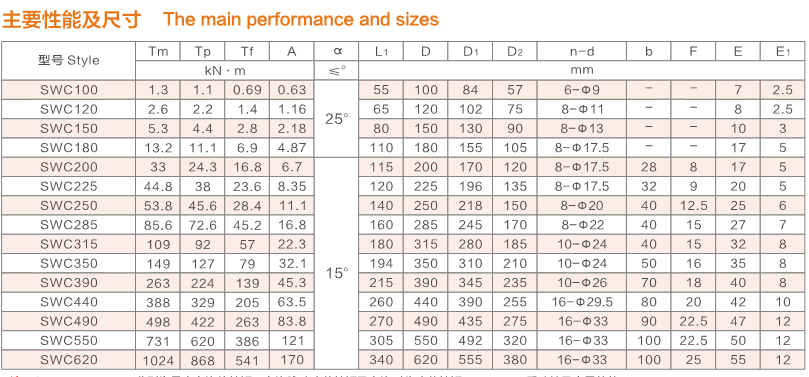
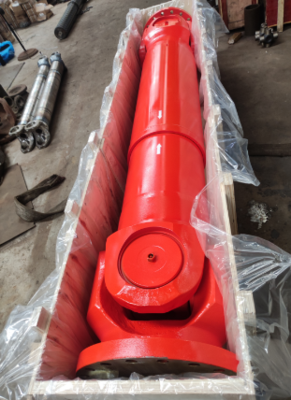
SWC550 Universal Joint Shaft


SWC550 Universal Joint Shaft
产品详情

SWC550 Universal Joint Shaft


Material:35CrMo and 20CrMnTi

https://www.timothyholding.com/SWC550-Universal-Joint-Shaft.html


Largely used in rolling mills,Pipe straighteners,Steel mill,tube mill,Continuous casting machinery,Paper machines ,Piercing mills,Bridge cranes,Steckel mill,Punchers,Roller conveyor, Rotating furnace,Mining machinery and other heavy duty machinery .

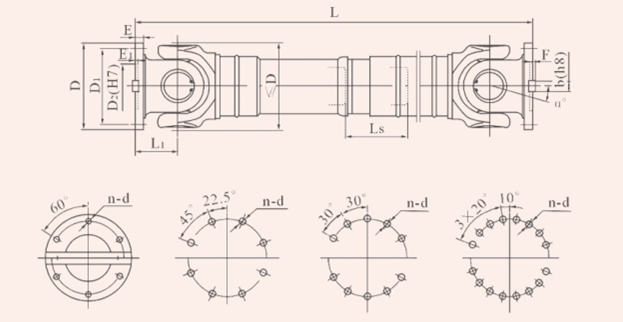
SWC drawing.pngSWC data.png

Nuclear Power Plant

Puncher

Steekle mill

Straightening machine

Contact Name:August

Mobile Phone:+86-13758897904

E :august@timothyholding.com

Address:55# Jinshi Road ,Lecheng Industrial Park,Yueqing City,Zhejiang provice,China


Friday, July 17, 2015

SWF cardan shafts

SWF cardan shafts
SWF cardan shaft

Material: 35CrMo and 20CrMnTi

Largely used in rolling mills,Pipe straighteners,Steel mill,tube mill,Continuous casting machinery,Paper machines ,Piercing mills,Bridge cranes,Steckel mill,Punchers,Roller conveyorRotating furnace,Mining machinery and other heavy duty machinery .

http://www.timothyholding.com/pd.jsp?id=163&_pp=2_306

Monday, August 11, 2014

Double Cardan Shaft

Double Cardan Shaft

A configuration known as a double Cardan joint drive shaft partially overcomes the problem of jerky rotation. This configuration uses two U-joints joined by an intermediate shaft, with the second U-joint phased in relation to the first U-joint to cancel the changing angular velocity. In this configuration, the angular velocity of the driven shaft will match that of the driving shaft, provided that both the driving shaft and the driven shaft are at equal angles with respect to the intermediate shaft (but not necessarily in the same plane) and that the two universal joints are 90 degrees out of phase. This assembly is commonly employed in rear wheel drive vehicles, where it is known as a drive shaft or propeller (prop) shaft.
Even when the driving and driven shafts are at equal angles with respect to the intermediate shaft, if these angles are greater than zero, oscillating moments are applied to the three shafts as they rotate. These tend to bend them in a direction perpendicular to the common plane of the shafts. This applies forces to the support bearings and can cause "launch shudder" in rear wheel drive vehicles.[13] The intermediate shaft will also have a sinusoidal component to its angular velocity, which contributes to vibration and stresses.
Mathematically, this can be shown as follows: If \gamma_1\, and \gamma_2\, are the angles for the input and output of the universal joint connecting the drive and the intermediate shafts respectively, and \gamma_3\, and \gamma_4\, are the angles for the input and output of the universal joint connecting the intermediate and the output shafts respectively, and each pair are at angle \beta\, with respect to each other, then:
\tan\gamma_2=\cos\beta\,\tan\gamma_1\qquad\tan\gamma_4=\cos\beta\,\tan\gamma_3
If the second universal joint is rotated 90 degrees with respect to the first, then \gamma_3=\gamma_2+\pi/2. Using the fact that \tan(\gamma+\pi/2)=1/\tan\gamma yields:
\tan\gamma_4=\cos\beta/\tan\gamma_2=1/\tan\gamma_1=\tan(\gamma_1+\pi/2)\,
and it is seen that the output drive is just 90 degrees out of phase with the input shaft, yielding a constant-velocity drive.
Thursday, August 7, 2014

Double Cardan Shaft and cardan joint


Aconfiguration known as a double Cardan joint drive shaft partially over comesthe problem of jerky rotation. This configuration uses two U-joints joined byan intermediate shaft, with the second U-joint phased in relation to the first U-joint to cancel the changing angular velocity. In this configuration, theangular velocity of the driven shaft will match that of the driving shaft,provided that both the driving shaft and the driven shaft are at equal angleswith respect to the intermediate shaft (but not necessarily in the same plane)and that the two universal joints are 90 degrees out of phase. This assembly iscommonly employed in rear wheel drive vehicles, where it is known as a drive shaft or propeller (prop) shaft.
Evenwhen the driving and driven shafts are at equal angles with respect to theintermediate shaft, if these angles are greater than zero, oscillating momentsare applied to the three shafts as they rotate. These tend to bend them in adirection perpendicular to the common plane of the shafts. This applies forcesto the support bearings and can cause "launch shudder" in rear wheeldrive vehicles.[13] The intermediate shaft will also have a sinusoidal component to its angular velocity, which contributes to vibrationand stresses.

Sunday, July 13, 2014

Double Cardan Shaft

Double Cardan Shaft

A configuration known as a double Cardan joint drive shaft partially overcomes the problem of jerky rotation. This configuration uses two U-joints joined by an intermediate shaft, with the second U-joint phased in relation to the first U-joint to cancel the changing angular velocity. In this configuration, the angular velocity of the driven shaft will match that of the driving shaft, provided that both the driving shaft and the driven shaft are at equal angles with respect to the intermediate shaft (but not necessarily in the same plane) and that the two universal joints are 90 degrees out of phase. This assembly is commonly employed in rear wheel drive vehicles, where it is known as a drive shaft or propeller (prop) shaft.
Even when the driving and driven shafts are at equal angles with respect to the intermediate shaft, if these angles are greater than zero, oscillating moments are applied to the three shafts as they rotate. These tend to bend them in a direction perpendicular to the common plane of the shafts. This applies forces to the support bearings and can cause "launch shudder" in rear wheel drive vehicles.[13] The intermediate shaft will also have a sinusoidal component to its angular velocity, which contributes to vibration and stresses.
Mathematically, this can be shown as follows: If \gamma_1\, and \gamma_2\, are the angles for the input and output of the universal joint connecting the drive and the intermediate shafts respectively, and \gamma_3\, and \gamma_4\, are the angles for the input and output of the universal joint connecting the intermediate and the output shafts respectively, and each pair are at angle \beta\, with respect to each other, then:
\tan\gamma_2=\cos\beta\,\tan\gamma_1\qquad\tan\gamma_4=\cos\beta\,\tan\gamma_3
If the second universal joint is rotated 90 degrees with respect to the first, then \gamma_3=\gamma_2+\pi/2. Using the fact that \tan(\gamma+\pi/2)=1/\tan\gamma yields:
\tan\gamma_4=\cos\beta/\tan\gamma_2=1/\tan\gamma_1=\tan(\gamma_1+\pi/2)\,
and it is seen that the output drive is just 90 degrees out of phase with the input shaft, yielding a constant-velocity drive.